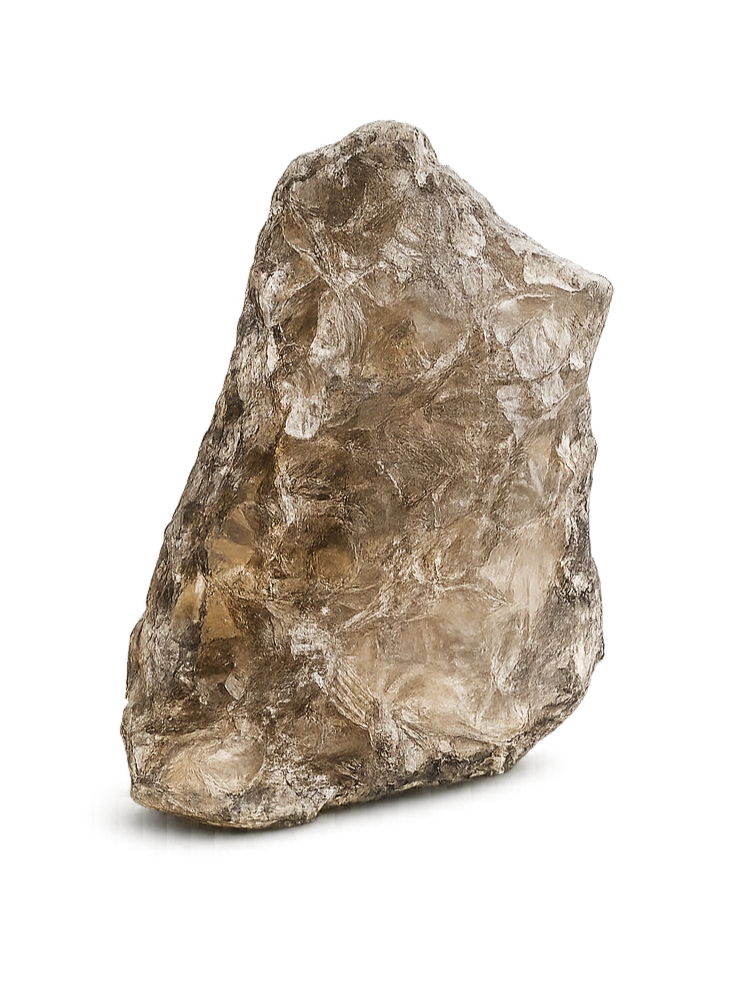
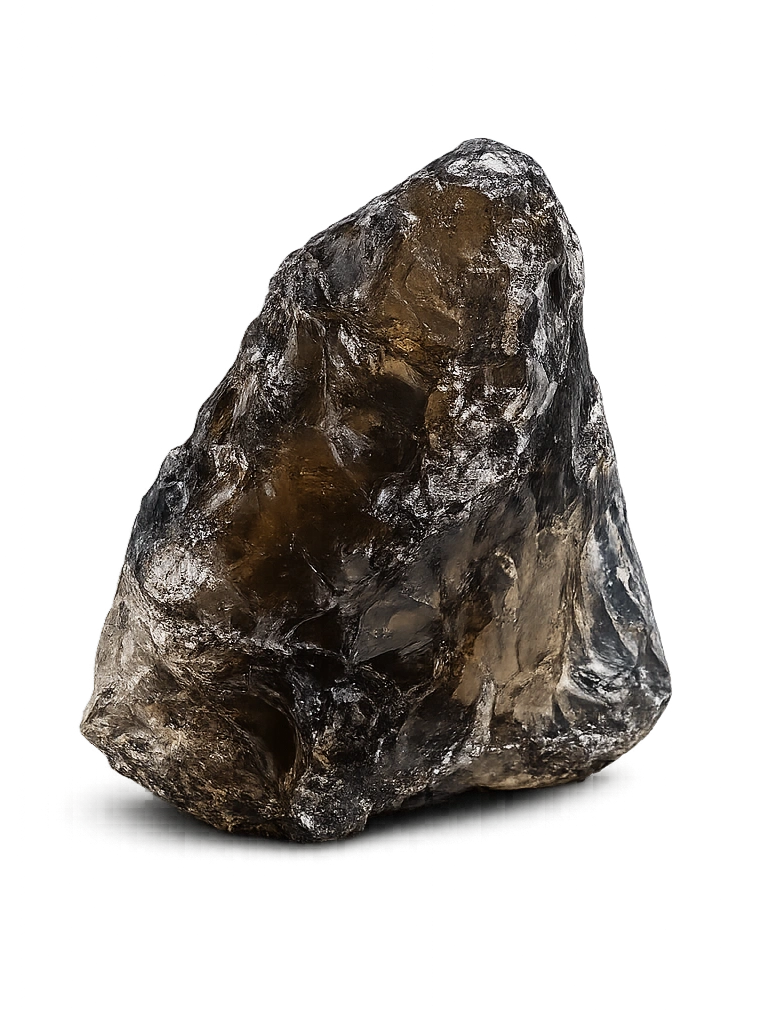
There are materials that are produced, and there are materials that occur. Obsidian belongs entirely to the second category. It is not refined, synthesised, or engineered. It is a consequence — of geological pressure, of temperature, of the precise speed at which molten stone meets cold air.
No two pieces emerge from that process identically, and no manufacturer can replicate the conditions that produce it. This is the first and most important thing to understand about the material Ashlar House has chosen to work with.
Obsidian forms when silica-rich lava — expelled from a volcano at temperatures exceeding a thousand degrees — meets cold air or water and cools in an instant. The cooling happens too rapidly for atoms to organise themselves into a crystalline structure. Instead, they are frozen mid-motion in a disordered, amorphous arrangement. The result is not rock in the conventional sense. It is a natural glass: dense, smooth, non-porous, and structurally unlike anything else the earth produces.
Because it has no crystalline lattice — no internal architecture to interrupt or scatter light — obsidian has an optical depth that polished mineral stones cannot match. Light does not bounce off the surface; it enters it. The degree to which it penetrates depends on the mineral inclusions and silica concentration of the specific block, which is why two pieces of the same variety, cut from stone yards apart, can look entirely different from each other. The surface is not a finish applied to the material. It is the material.
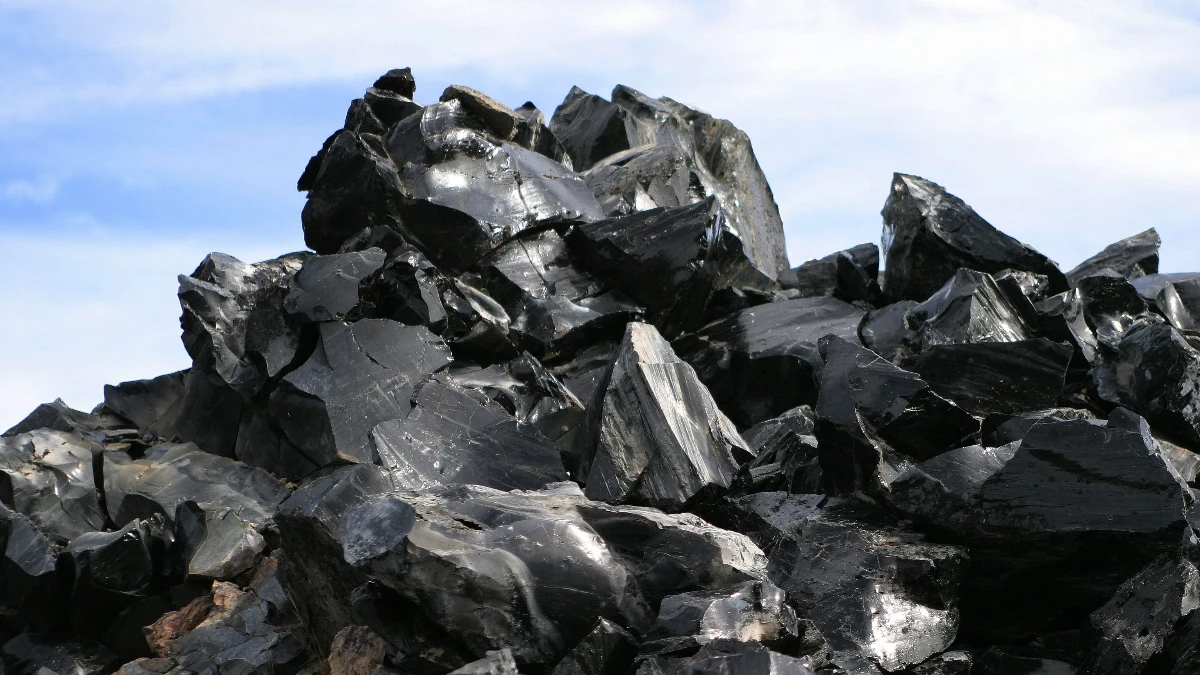
The obsidian used in every Ashlar House piece originates from the Araratian highlands of Armenia — specifically from Arteni Mountain in the Aragats district, one of the most geologically significant obsidian sources in the world. The region sits at the intersection of tectonic forces that have produced a volcanic landscape of exceptional variety, yielding obsidian types found nowhere else in combination.
Where most obsidian-bearing regions produce one or two varieties, the Araratian highlands yield five distinct natural forms, each with its own visual character, mineral composition, and working properties.
This is not simply a matter of geography. The particular chemistry of Araratian magma — its silica concentrations, its trace mineral content, the rate of its historical flows — determines the precise optical and physical properties of each stone. There is no substitute source, and there is no synthetic equivalent. The stone is what it is because of where it came from and how it was formed.
The edge that obsidian produces when fractured cleanly is, at a molecular level, among the sharpest that any natural material can achieve. We note this fact because it speaks to what the material is — not what we choose to claim about it.
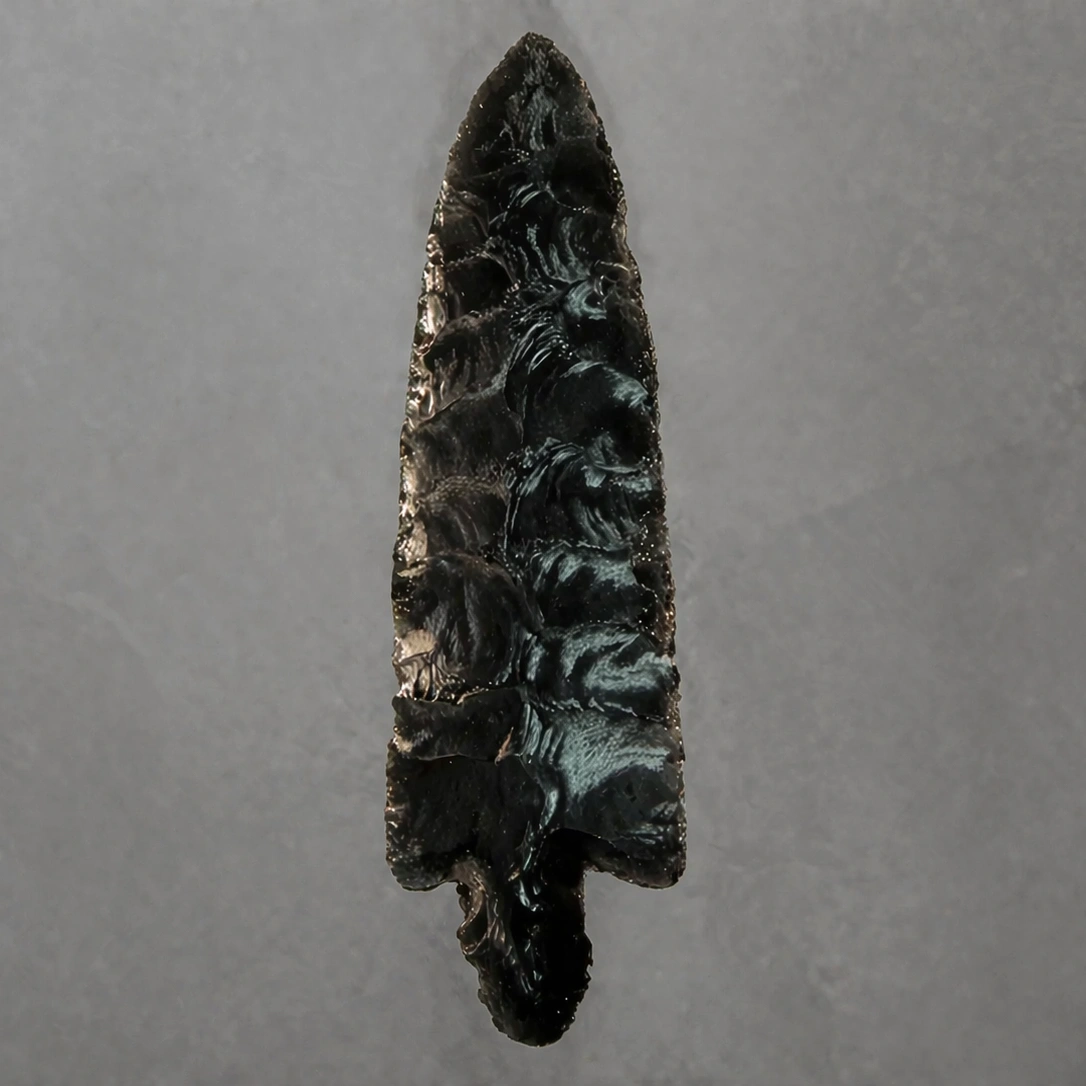
Human beings first worked Araratian obsidian more than one million years ago. The earliest Acheulean tools found in the Armenian Highlands were made of it — cut, shaped, and traded by people for whom the material's utility was self-evident long before they had language to name it. By the Neolithic period, roughly six to eight thousand years ago, obsidian from these highlands was being distributed south through the Caucasus to Iran and further to Mesopotamia — one of the earliest long-distance trade commodities in recorded archaeology, carried across hundreds of miles by people who had no wheeled transport.
The reason it was worth that effort is the same reason it remains relevant: a properly cut obsidian blade reaches an edge of approximately three nanometers — thirty angstroms — compared to three hundred angstroms for the finest household razor. Under an electron microscope, a steel scalpel edge appears serrated; obsidian appears continuous and smooth, dividing individual cells rather than tearing between them. Contemporary research in peer-reviewed surgical literature has confirmed that obsidian incisions produce narrower scarring in early healing than equivalent steel incisions. A small number of surgeons continue to use obsidian blades for precision procedures where tissue trauma must be minimised.
The material that served the first toolmakers of the Araratian highlands still exceeds, in one specific and measurable respect, the best that industrial metallurgy produces.
Obsidian rates between 5 and 5.5 on the Mohs hardness scale — harder than window glass, comparable to a steel knife blade, softer than quartz. This places it firmly in the category of materials that resist everyday abrasion without being impractical to work. Its surface is non-porous, which means it does not absorb liquids or harbour bacteria. It does not tarnish, oxidise, or react. An obsidian object, properly kept, does not age in the way that most materials age. It acquires use — the particular warmth of an object handled regularly — without degrading.
The tactile quality of polished obsidian is distinct from that of any other stone. It has a slight temperature that adjusts to the hand. Its surface is not quite smooth in the way that glass is smooth — it has a resistance, a density, that communicates the weight of what it is. This is not an aesthetic choice. It is a physical consequence of its structure.
The Araratian highlands yield a remarkable range of natural obsidian varieties, shaped by differences in mineral content, cooling conditions, and geological formation within the same volcanic region. This richness gives rise to stones with distinct visual characters, from absolute black to patterned, reflective, and light-responsive forms. For Ashlar House, we have chosen to work with the following five varieties, each selected for its particular material presence and suitability across the collection. Availability by variety differs by piece and is confirmed at the point of enquiry.
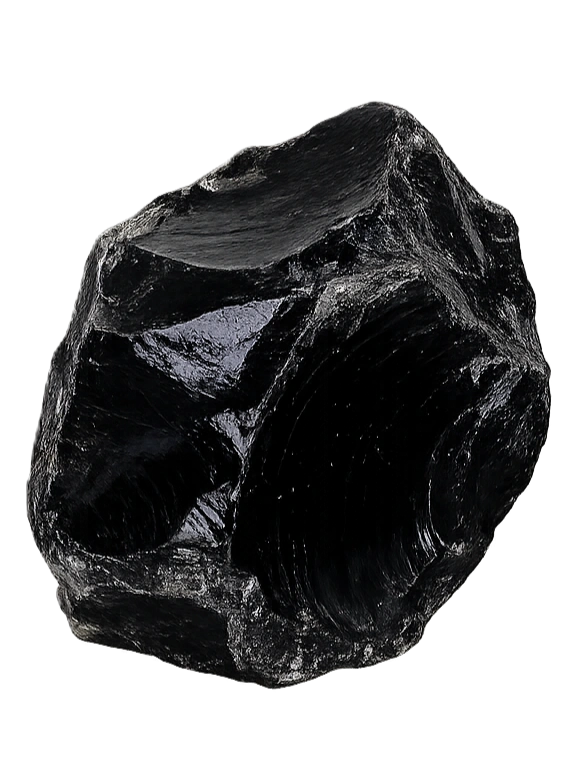
Jet Black
The most elemental variety — dense, absolute, and deeply saturated in tone. Severe, minimal, and quietly powerful.
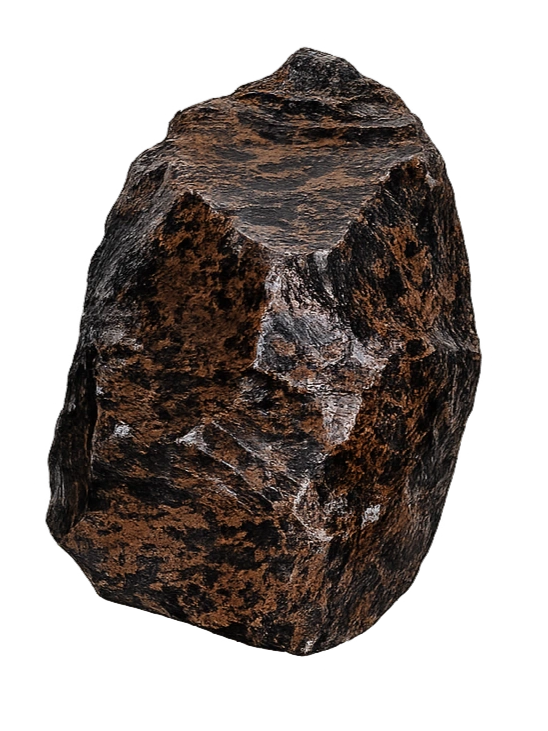
Brown Burl
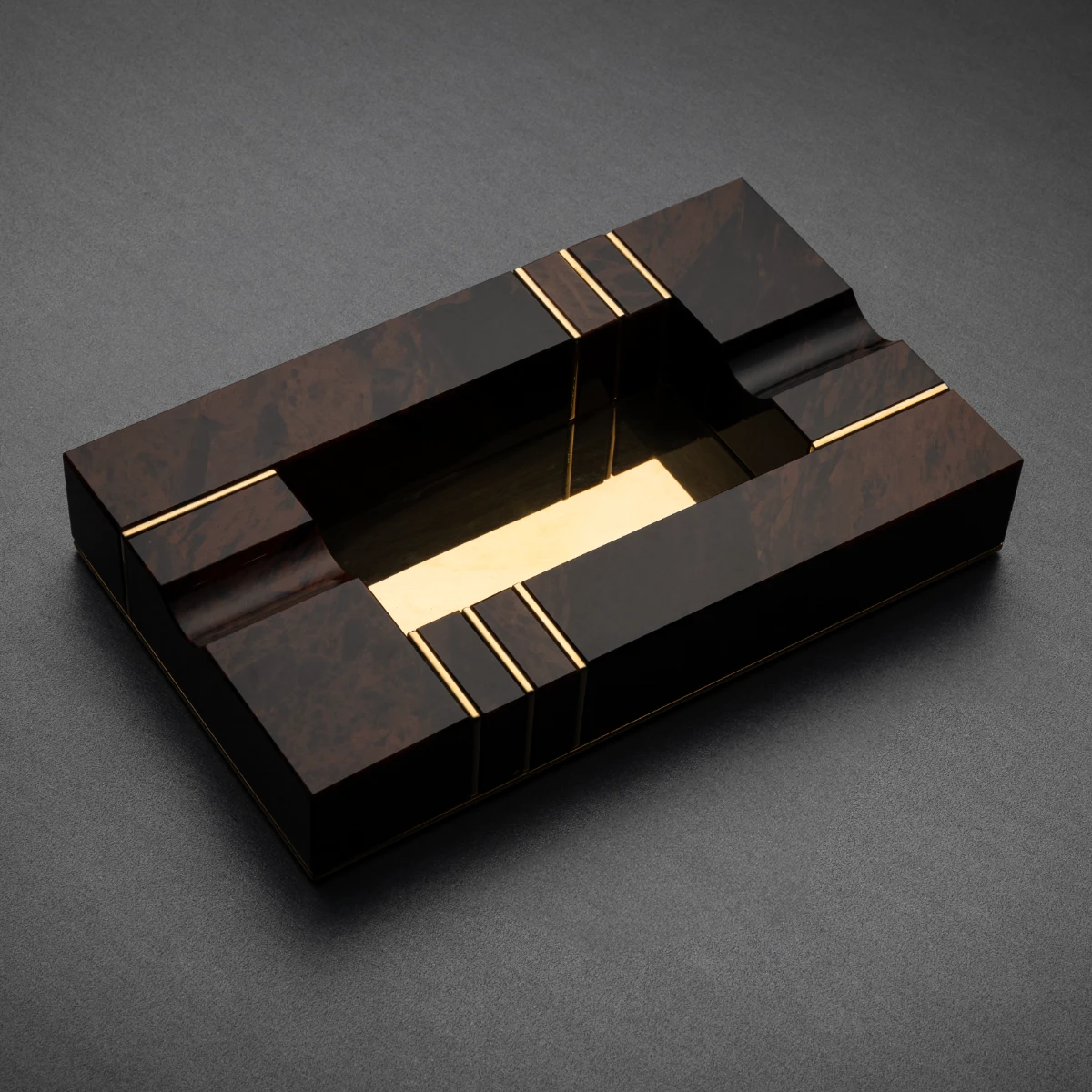
Marked by warm mineral patterning in tones of amber, chestnut, and brown. Each piece is naturally unique.
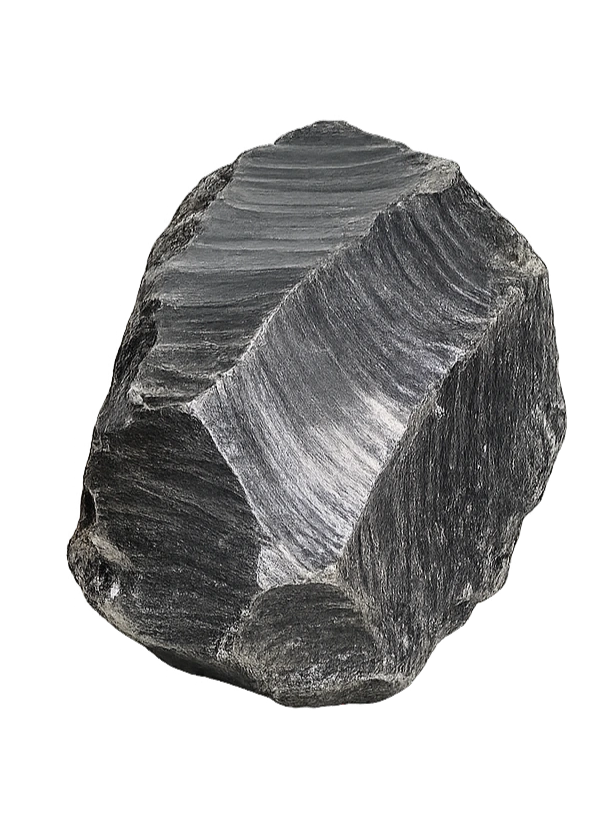
Silver Sheen
A cooler variety with soft silver-grey movement across the surface. In light, it takes on an almost metallic character.
Translucent
Dark at first glance, yet remarkably clear when held to light. A rare variety with striking depth and internal presence.
Semi-Translucent
A balance between opacity and light. Dark in mass, yet luminous at the edges and through finer sections.
On select pieces, the obsidian body is paired with applications of precious metal — most commonly 24-karat gold plate, burnished by hand to the proportion the stone requires. The visual contrast between volcanic stone and warm metal is not a decorative convention — it is one of the few material pairings in which opposition produces resolution rather than conflict.
The density of the stone grounds the metal. The metal illuminates what is already in the stone. Neither diminishes the other. Gold is the most frequent choice, but the pairing extends to other precious metals where the design and the stone demand it. Both are available to discuss through private enquiry.